How To Read Crochet Patterns Without The Guesswork

You’re not broken if you don’t know how to read crochet patterns. It can feel impossible, but reading crochet patterns can be mastered with simple steps.

Know the abbreviations

Understand how symbols are used

Decode each line step-by-step

The Real Reason Reading Crochet Patterns Feels Like Solving a Puzzle

Any crocheter can struggle reading crochet patterns but it’s not always because they lack skills. The challenge in reading crochet patterns is understanding how each pattern uses the “secret code”. Here’s what can trip you up when learning how to read crochet patterns:

A dark teal yarn ball icon with a slightly unraveled end of yarn curling down to the ground, used as a styled bullet point.

“2sc in next st, sc in next 3 sts”

Does that mean 5 stitches total? Or 4? And where exactly do those stitches go? It’s 5 total stitches. You first make 2 single crochets in the first stitch, then 1 single crochet in each of the next 3 stitches.

Dark teal yarn ball icon, used as a styled bullet point.

The “dc2tog” Confusion

This abbreviation gets mistaken as “2 double crochets in the next stitch” when it actually means the opposite, decrease by working 2 double crochets together into one stitch.

Icon-style heart-shaped yarn ball, symbolizing love and relaxation through crochet.

What Does “Work Even” Mean?

This phrase stops many crocheters in their tracks. What does “work even” actually mean? It’s code for continue doing the same stitch pattern until you reach the end of the round or row.

Icon-style dark teal yarn ball with a crochet hook through it, used as a styled bullet point.

US vs UK Crochet Terms

One of the most common frustrations comes from not knowing whether a pattern uses US or UK terms. Both use the same abbreviations but the stitches are completely different.
The confusion often comes from how crochet patterns are written, not your ability to read them.

Learning Abbreviations To Read Crochet Patterns

When you’re learning how to read crochet patterns, abbreviations are your foundation. They are crochet’s shorthand for naming stitches and some techniques. Crochet abbreviations help to keep the length of a pattern at a minimum and provides a universal system that crocheters worldwide can follow. Here are some abbreviations you might see in a crochet pattern.

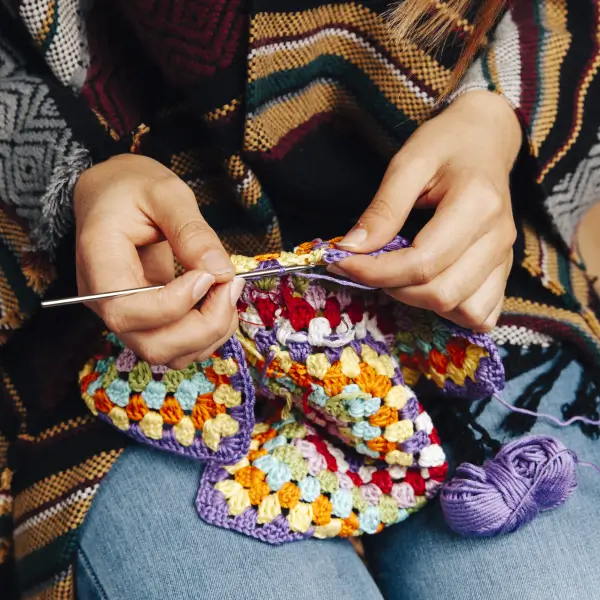
Hands crocheting a colorful granny square blanket with purple yarn.

Crochet Stitch Abbreviations

ch: chain stitchThe foundation: yarn over and pull through the loop on your hook.
sl st: slip stitchInsert hook into the designated stitch, yarn over, pull through both loops on hook.
sc: single crochetThe basic stitch: insert hook into the designated stitch, yarn over, pull through, yarn over, pull through both loops on your hook.
inc: increaseWork the requested stitch 2 times into the same stitch (increases the total stitch count by 1)
dec: decreaseWork the requested stitch over 2 stitches (reduces the total stitch count by 1)

Master the Symbols That Make Reading Crochet Patterns Easy

When reading crochet patterns, you’ll encounter abbreviations and symbols that compress instructions keeping the length of a pattern to a minimum. This shorthand also provides a universal language for crocheters worldwide to follow. Here are 3 symbols you need to know when reading crochet patterns.

Teal circle with parentheses symbol in the center.

Parentheses

Groups instructions so they can be repeated as directed.

Example: “(sc, inc) x 6” means repeat the sequence inside the parentheses 6 times. So you would single crochet and then increase, and repeat that 5 more times.

Tip: Count the stitches you start with to help understand when repeats appear in the instructions.

Teal circle with two asterisks symbol in the center.

Asterisks

Marks the start of instructions to be repeated as directed.

Example: “sc in next 2 sts *dc, ch 1; repeat from * across” means crochet dc, ch 1, then keep repeating dc, ch 1 until you reach the end of the round/row.

Tip: Asterisks can also be used like parentheses to group instructions and stitches so they can be repeated as directed.

Teal circle with bracket symbol in the center.

Brackets

Used when to nest instructions in complex repeats.

Example: “(sc in the next 2 sts, [inc] twice) 2 times” means single crochet in the next 2 stitches, increase twice, then repeat everything once more.

Tip: Brackets also provide the total number of stitches made in the round/row.

Partial logo of Patterns by Patsy featuring a dog head with a crochet hook in its mouth, tilted slightly.

The Repeat Mistake That Trips Everyone Up When Reading Crochet Patterns

Many beginners struggle with knowing where repeat sequences start and stop when learning how to read crochet patterns. The key is reading the entire instruction first, then breaking it into chunks.

Decode Tricky Instructions To Read Crochet Patterns

Knowing the abbreviations and symbols is one thing. Now you need to figure out how the pattern designer is using them to explain how you can recreate their finished item. Here are some examples that might be misinterpreted when you’re learning how to read crochet patterns.

The Mix-Up That Catches Everyone

“sc2” vs “2sc” beginners often swap these in their minds, but they mean completely different things:

sc2 = single crochet 2 stitches together (decrease)
2sc = 2 single crochets (usually in the same stitch for an increase)

Tip: When you see a number before the abbreviation (2sc), you’re making that many stitches. When you see a number after (sc2), you’re working that many stitches together.

What Does “(sc, inc) around” Mean?

Instead of telling you how many times to repeat the grouped instructions inside the parentheses, this set of instructions just says “around”. So you will repeat what’s inside the parentheses until you reach the end of the round/row.

Tip: When you see instructions in parentheses followed by “around” or “across,” treat everything in parentheses as one unit to repeat.

Special Stitches Can Make Reading Patterns Tricky

Sometimes a pattern will use a stitch you haven’t seen before and give instructions for it in the notes or special stitches section at the beginning of the pattern. This helps to keep the pattern length minimal by simply providing the stitch abbreviation when it should be used. This can create confusion when flipping between notes and where you are in the pattern.

Tip: When you see instructions in parentheses followed by “around” or “across,” treat everything in parentheses as one unit to repeat.

Tips for Reading Crochet Patterns Like a Pro

Learning how to read crochet patterns goes beyond abbreviations and symbols. These tips will help you choose patterns that make sense from the start so you’re not left staring at your stitches wondering where it all went wrong.

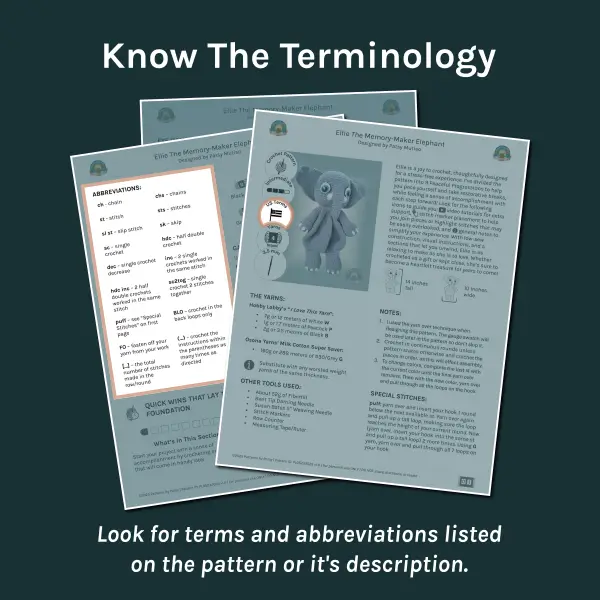
Three crochet pattern pages fanned out with the Abbreviations and Terms areas highlighted.

Know The Terminology

Understanding the terminology used in the pattern will help you avoid confusion about the stitches you need to make since sc in US terms is different from a sc in UK terms.

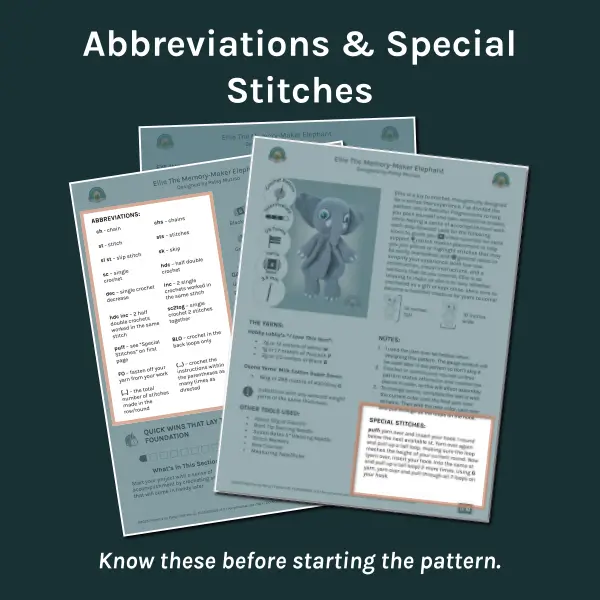
Three crochet pattern pages fanned out with the Abbreviations and Special Stitches areas highlighted.

Review Abbreviations & Special Stitches

Make sure you know how to crochet the stitches listed and look for anything you might not be familiar with so you can practice before starting.

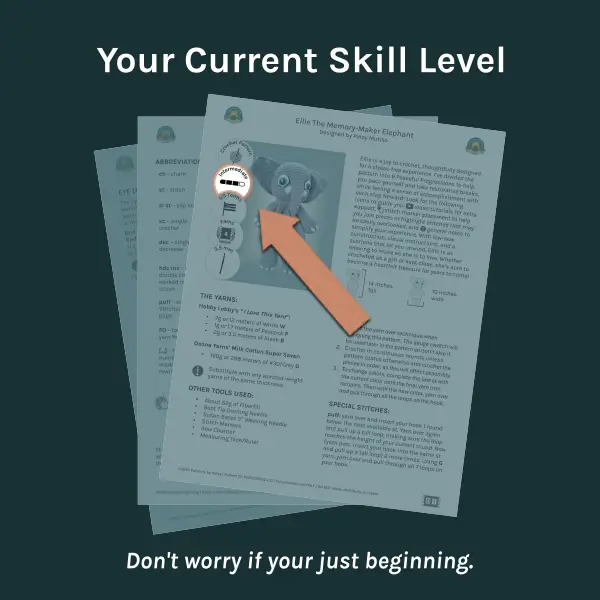
Three crochet pattern pages fanned out with the Skill Level area highlighted.

Know Your Current Skill Level

Choosing a pattern that matches your current skill level will go a lot smoother and should mean less time trying to learn on the fly.

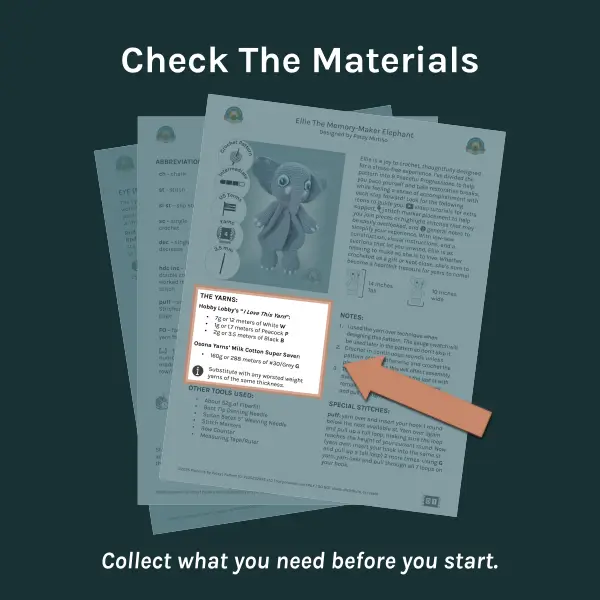
Three crochet pattern pages fanned out with the Materials section highlighted.

Check The Materials List

Note hook size, yarn weight, and any special materials like safety eyes. Using the wrong combination of hook size and yarn weights can make your finished project too big or too small.

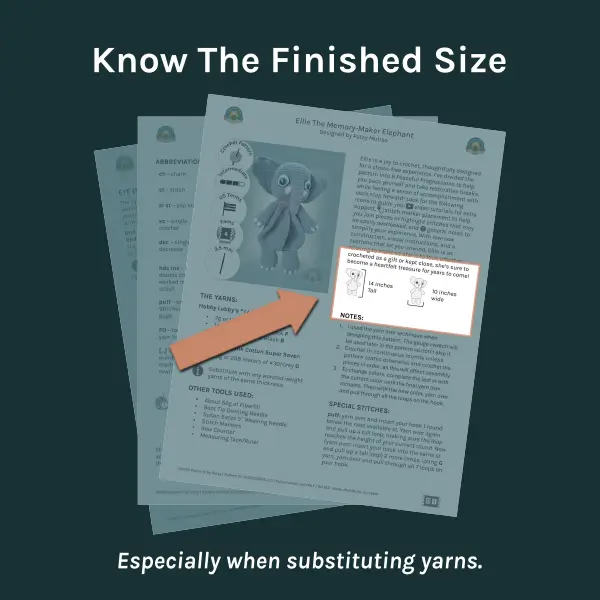
Three crochet pattern pages fanned out with the Finished Size highlighted.

Know The Finished Size

After you know what materials are being used, look at the finished size to get a better understanding of how big or small your finished project will be. This is especially helpful if you’re substituting yarns.

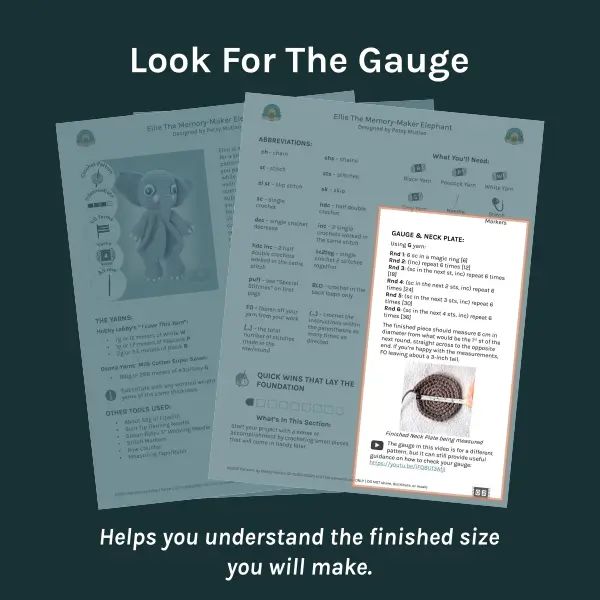
Three crochet pattern pages fanned out with the Gauge Section highlighted.

Check Your Gauge

Taking the time to make this test swatch will help you understand what the size of your finished project should be. If you’re crocheting amigurumi, your pattern may not provide this section so be careful if you’re substituting yarns.

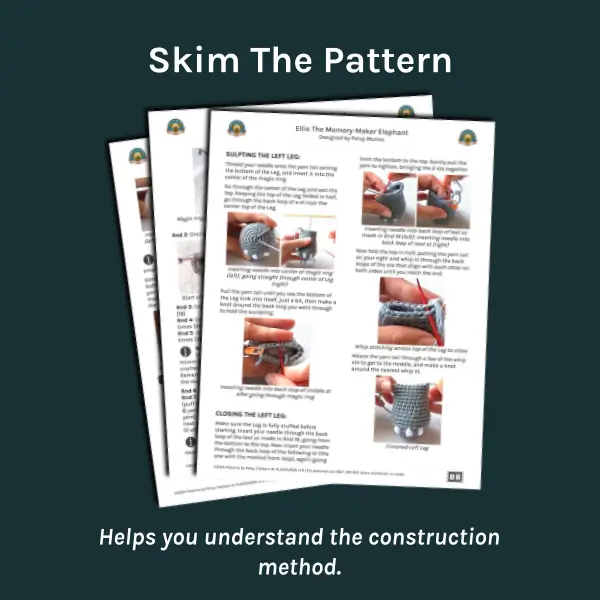
Three crochet pattern pages fanned with text that says ‘Skim the Pattern – Helps you understand the construction method.’”

Skim Through The Pattern

This can help you understand how the pattern is worked, top/down, right/left, how many pieces there are, and should give you a better experience since you kind of know what’s next.

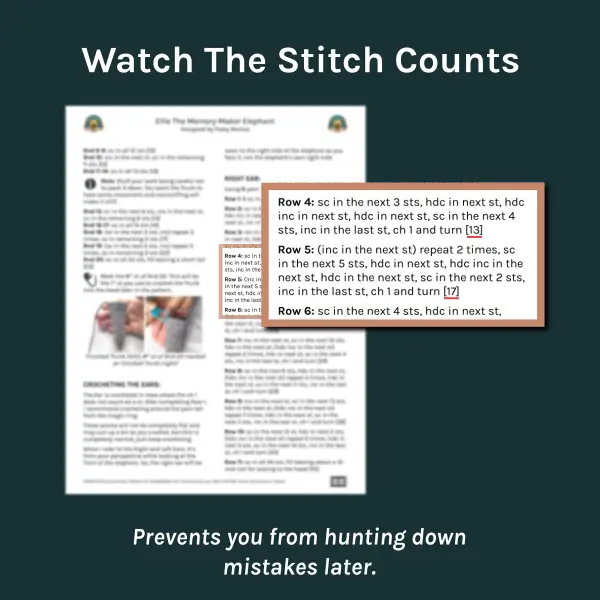
A page of a crochet pattern with a section of it magnified.

Watch The Stitch Counts

Most rounds or rows end with a stitch count in parentheses or brackets like “(24 sts)”. This is your safety net when reading crochet patterns. If your count is off, you’ll know immediately instead of discovering problems 10 rows later.

Crochet pattern page with one round of instructions highlighted, shown alongside an icon-style manual row counter displaying the same round number.

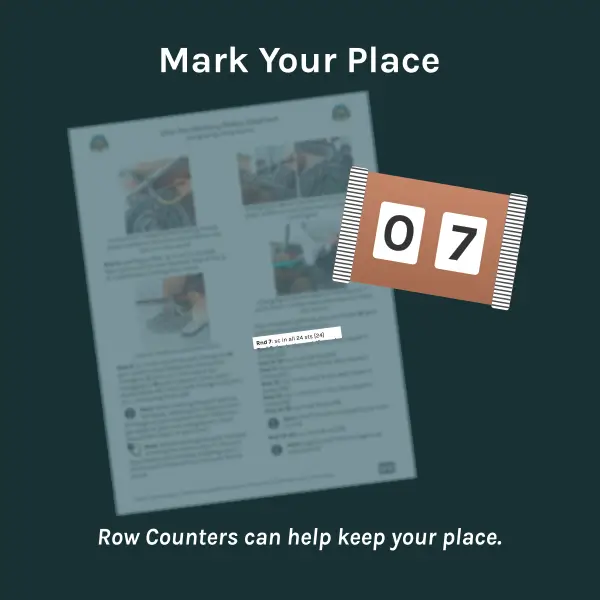
Mark Your Place

Use a row counter or simply jot notes on paper. You can also use stitch markers to help you know where your round/row ends. Nothing’s more frustrating than losing your place when reading crochet patterns and having to guess where you left off.

Three crochet pattern pages fanned out.

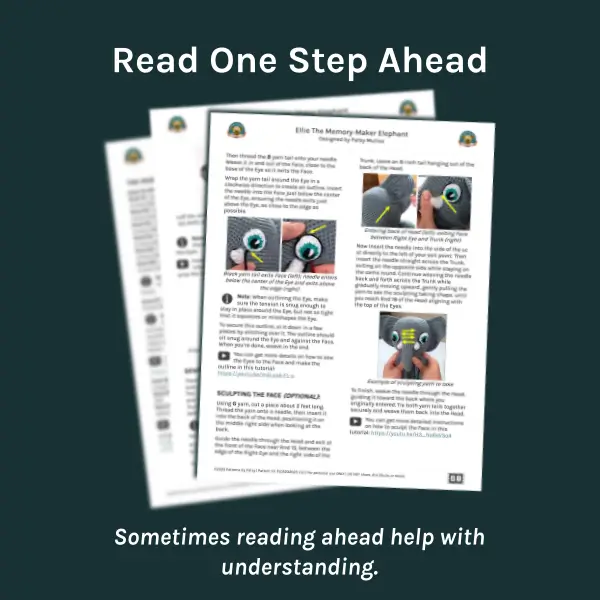
Read One Step Ahead

Make sure you read the whole round/row of instructions before starting it. This can help you avoid issues with mismatched stitch counts.

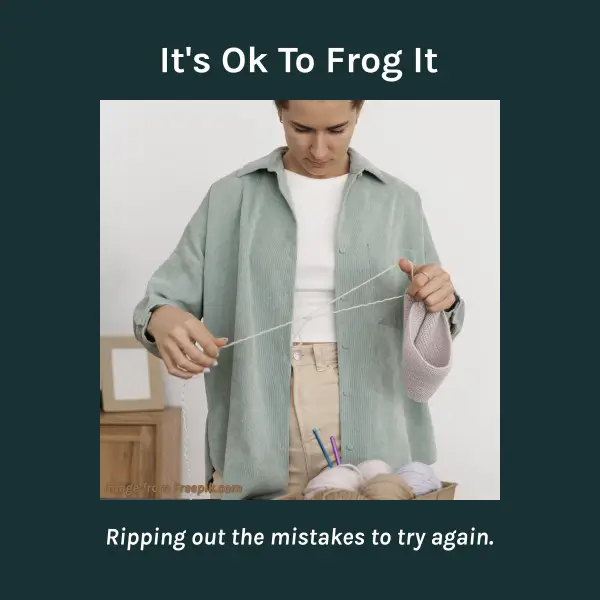
Woman holding a crochet project with strands of yarn pulled loose, symbolizing the idea of frogging or ripping back stitches

Rip Back To Move Forward

Frogging means unravelling your work to try again. This happens if you’ve made the wrong stitches or need to correct for even tension.

Three crochet pattern pages fanned out with an email icon beside them and the phrase ‘Email the designer.’ Text above reads ‘Don’t Stay Stuck’ and below reads ‘It’s ok to ask for help.’

Ask For Help

If you get stuck on something, reach out to the pattern designer for help. If you can’t reach them, try a Facebook group.

Ready to Practice Reading Crochet Patterns?

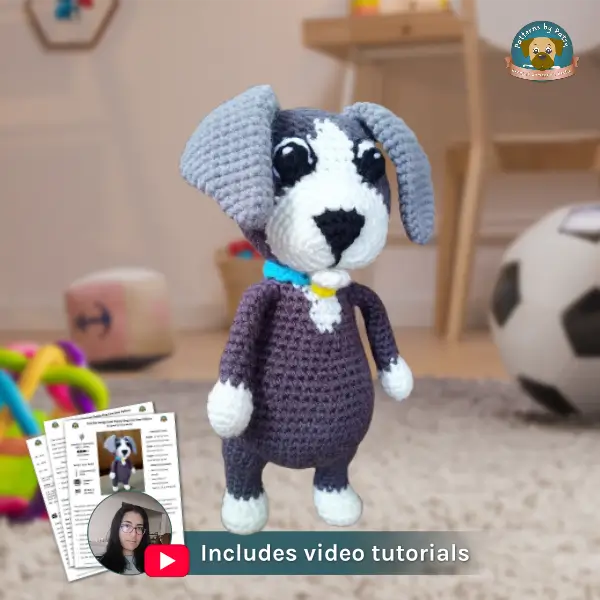
Crochet Puppy Dog amigurumi standing upright in a child’s room, with a small inset showing the pattern pages and YouTube icon labeled ‘Includes video tutorials.

Get My FREE Pattern And Test Your New Skills!

Join my newsletter and receive my low-sew crochet amigurumi Puppy Dog pattern for FREE!
This beginner-friendly pattern puts your new skills of reading crochet patterns to work:

No confusing shorthand

Low-sew assembly

Photo and video tutorials

Scroll to Top
Patterns In Your Cart
0
Subtotal

Don't forget to log in for a smoother checkout!